
Designing the Future: Grimshaw’s Virtualisation Journey
How Grimshaw migrated hundreds of high-performance design workstations to Inevidesk — without compromising performance, security, or control
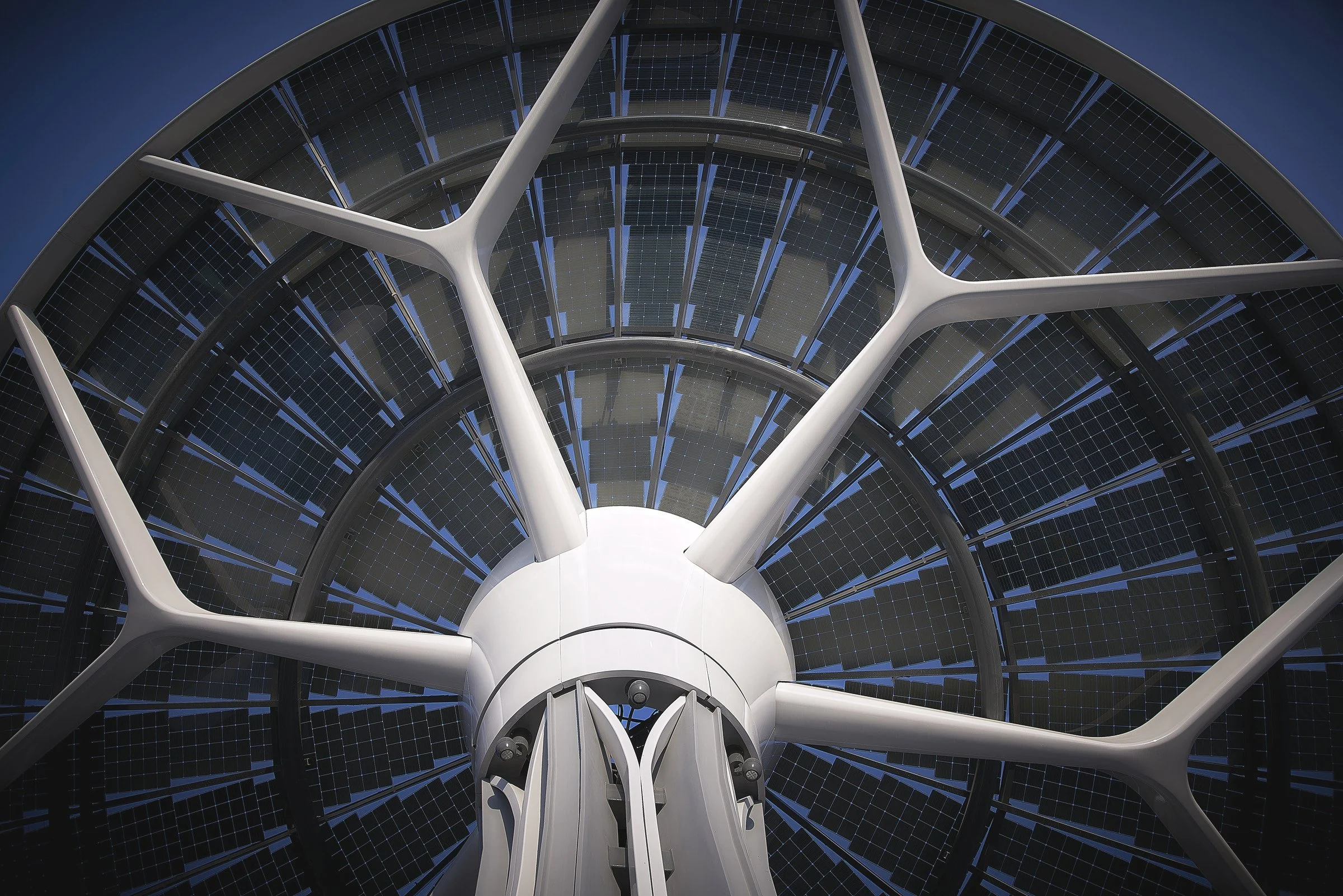
‘Energy Tree’, Sustainability Pavilion, Dubai
In early 2026, Grimshaw completed the migration of its entire UK and European design teams onto the Inevidesk virtual desktop infrastructure (VDI) platform.
The move marked the replacement of a centralised estate of rack-mounted physical workstations with a fully virtualised, high-performance workstation environment designed to support increasingly complex architectural design, modelling, and visualisation workloads.
Danny Gillmore, Head of Information Technology at Grimshaw, explains the thinking behind the decision.
From centralised physical workstations to virtualised performance
“Several years ago, we made a strategic decision to centralise our workstation infrastructure into a secure datacentre environment,” says Gillmore.
“We wanted to strengthen our security posture and simplify our operations across the UK and Europe.”
However, as the next hardware refresh cycle approached, Grimshaw chose to step back and reassess the model - not simply refresh it.
“At Grimshaw, we try to make infrastructure decisions with a long-term horizon in mind,” Gillmore explains. “The question isn’t just whether something works today, but whether it gives the Practice the flexibility to evolve as design methods, tools, and expectations continue to change.”
The choice was clear: refresh and expand a fleet of high-specification physical workstations, or evolve the workstation model entirely.
“We wanted to improve three things in a measurable way,” says Gillmore. “Operational efficiency, infrastructure flexibility, and sustainability without sacrificing workstation-class performance.”
Why Inevidesk and why now
Grimshaw had evaluated VDI previously, but like many architecture and design practices, found traditional platforms ill-suited to real-world design workloads.
“Conventional VDI solutions tend to struggle with the realities of architectural work - GPU contention, inconsistent performance, high operational complexity, and escalating cost,” Gillmore notes.
What set Inevidesk apart was its architectural approach.
“What differentiated Inevidesk was its ability to deliver genuine workstation-level performance through virtualisation, without introducing the fragility or administrative overhead we’d seen elsewhere.”
Before committing at scale, Grimshaw deployed a limited number of Inevidesk pods in 2024 to support its visualisation team.
“That pilot was an important proof point,” says Gillmore.
“Deployment was straightforward, integration with our existing infrastructure was clean, and — most importantly — performance met the expectations of some of our most demanding users.”
Scaling from pilot to hundreds of users in a few days.
At the next refresh cycle, Grimshaw expanded the deployment across approximately 220 designers, migrating them to Inevidesk virtual desktops.
“The contrast with previous physical workstation migrations was stark,” says Gillmore.
“What would previously have taken multiple weeks of staging, imaging, and physical deployment was completed in a matter of days.”
Key operational improvements included:
● Rapid workstation provisioning using templates and cloning
● Near-zero disruption for end users during cutover
● Centralised configuration control without desk-side intervention
From an operational standpoint, the benefits were immediate.
“With Inevidesk, we can provision new machines or reallocate CPU, RAM, and GPU resources in minutes,” Gillmore explains.
“That level of responsiveness simply isn’t possible with physical hardware — and it fundamentally changes how quickly we can respond to evolving project needs.”
Density, resilience, and sustainability. By design
Virtualising the workstation estate delivered tangible infrastructure benefits.
● Higher workstation density per rack, reducing datacentre footprint versus like-for-like physical workstation replacements
● Lower power draw per user when normalised against equivalent-performance physical workstations
● Dual power and network paths, improving service resilience and fault tolerance
“Even accounting for higher-spec GPUs, the overall efficiency of the platform allows us to support more users, more flexibly, with less physical infrastructure,” says Gillmore.
“As a practice, we think carefully about sustainability in everything we do — including our own systems. Improving efficiency and making better use of shared resources is part of that responsibility.”
A platform that gives time back to IT
Beyond infrastructure metrics, the operational impact on Grimshaw’s IT team has been significant.
“The administrative model is genuinely well thought through,” Gillmore says.
“Time we previously spent managing hardware lifecycles, failures, and manual reconfiguration is now time we can spend being proactive for the Practice.”
The Inevidesk management portal enables:
● Centralised oversight of the entire VDI estate
● Rapid response to changing project demands
● Predictable performance delivery across teams and locations
“For us, technology isn’t a back-office concern,” Gillmore adds.
“It’s part of how we enable design quality at scale.”
A foundation for the next phase
Grimshaw now operates a unified, high-performance virtual workstation environment capable of supporting its design teams across geographies with greater flexibility, improved operational efficiency, and a more sustainable infrastructure model than was possible with physical workstations alone.
“Innovation, for us, isn’t about adopting technology for its own sake,” Gillmore concludes.
“It’s about making deliberate, future-facing choices that support the Practice creatively, operationally, and responsibly.”